
Somatic Therapy | Yoga and Sound Baths in Inman Park | GA

Somewhere in the years of managing and achieving and showing up for everyone else, the thread back to oneself can get very thin. Not severed, never quite that, but thin enough that the question of what one actually feels, wants, or needs becomes genuinely difficult to answer. Power Through Process is a somatic therapy and sound healing practice for women of color who have noticed that thinning and are ready to begin the work of returning. Not fixing. Not self-improving. Returning. Inman Park was Atlanta's first planned suburb, its Victorian homes and wide canopy streets laid out in the 1880s along what would become Euclid Ave and Carroll St NE. The BeltLine Eastside Trail now runs through the neighborhood's western edge, connecting it to Ponce City Market to the north and the emerging Reynoldstown corridor to the south. Freedom Park stretches east from the neighborhood toward Little Five Points, where DeKalb Ave meets Euclid in a pocket of Atlanta that has resisted the homogenization of so much of the city. The Inman Park/Reynoldstown MARTA station sits on the neighborhood's southern border, and Krog Street Market anchors the community gathering space at the BeltLine's intersection with DeKalb Ave. The old Trolley Barn on Edgewood Ave still stands, a reminder of the neighborhood's original purpose and the city's original ambition. Women who find their way to somatic therapy in Inman Park often describe a sense of having been away from themselves for a long time. They know how to be excellent. They know how to care for others. They have moved through the world with competence and purpose. What they have not always done is turn that attention toward the interior, toward the body's own quiet knowledge of what it needs. My practice creates the conditions for that return.

How it works

01


Start where you are—not where you think you “should” be

The body communicates constantly, but in a culture that prizes thinking and producing, those communications are often overridden before they can be heard. Somatic therapy reverses that default, treating sensation as the primary source of meaningful information. The slight constriction in the throat when something important is about to be said. The way the body softens or hardens in different kinds of relationship. These are the body's knowledge, and sessions are built around listening to it.

02


No scripts. Just what your body needs

The first step into this work requires nothing more than the willingness to reach out and have a conversation. No particular readiness, no crisis-level need, no requirement to arrive with a clear account of what is wrong. The first conversation is relaxed and genuine, aimed simply at discovering whether this work and this practitioner feel like the right fit.

03


Where science meets soul

The changes produced by somatic therapy are not additions to an already overloaded life. They are a deepening of what is already present, a growing rootedness in the body's own experience that makes everything else more navigable. Clients describe becoming more themselves over time rather than becoming better managers of their symptoms. That distinction is what this work is actually after.

Explore my therapy services and specializations


The women who arrive at somatic therapy from neighborhoods like Inman Park often have rich inner lives that have been largely unexplored because external demands have always taken priority. They are thoughtful, aware, and deeply unfamiliar with what it feels like to have their own inner experience be the most important thing in the room. Somatic therapy offers exactly that. Sessions use the body's responses as the primary guide, attending to sensation and breath as they arise and allowing them to lead where they need to go. Over time, clients develop a quality of inner attention that begins to change how they inhabit their daily experience. They become more present, more responsive, and more genuinely at ease. Sessions are held virtually and are accessible from any private space in Inman Park or beyond.

Returning to oneself has a physical dimension that talking alone cannot fully address. Yoga and sound baths work with the body's own rhythms, breath, and resonance to create the felt experience of coming home, not metaphorically but in the body itself. The returning is physical before it is anything else. Sound healing uses vibrational frequency to support the nervous system in releasing what it has been holding without requiring intellectual participation. The body receives what is offered and responds in its own way. Yoga sessions build the capacity to tolerate and welcome that response, moving slowly through sensation without needing to manage or direct it. These offerings are available virtually and are appropriate for women at any level of prior experience.

The experience of being away from oneself often shows up most clearly in relationships. The habitual self-effacing. The instinctive orientation toward what others need before there is any contact with what one needs oneself. Relational Gestalt therapy works with exactly this dynamic, using the live experience of the therapeutic relationship to explore what genuine mutual contact feels like. Sessions attend to the quality of what passes between practitioner and client: what is offered, what is received, what is deflected, and what lights up. These are not abstract observations. They are the actual field of the work, and attending to them closely produces changes that both parties can feel. Clients find that the quality of presence they develop in sessions begins to reshape their experience of their closest relationships in ways that are concrete and meaningful.

Women who have been away from themselves for a long time often have nervous systems that have settled into a narrow range of available states. Alert and productive, or flat and depleted. The rich middle ground of genuine rest, of ease, of embodied presence, has become unfamiliar territory. Nervous system regulation work maps that territory and helps the body begin to inhabit it. Sessions create experiences of safety that the nervous system can recognize and return to. Over time, the range of available states expands. The flat places become warmer. The activated places become more manageable. The body begins to know more of what is possible. This work is offered virtually and is accessible regardless of prior experience with nervous system or somatic practices.

The thread back to oneself is sometimes thin because trauma taught the body that being close to oneself was not safe. Not necessarily through a single dramatic event, but through the accumulated experience of having one's needs consistently unmet, one's feelings consistently invalidated, one's selfhood consistently required to make itself smaller. Somatic trauma therapy works gently with that accumulation. Sessions move at the pace of the nervous system's own readiness, which is always slower than the mind would prefer and always exactly right. What the body has been holding begins to move when the conditions are genuinely safe, and creating those conditions is the foundation of the work. Clients often find that what they encounter through this work is both more complex and more workable than they expected. The body knows what it is carrying and, in the right container, knows how to begin releasing it.

For women who have lost the thread back to themselves, anxiety often fills the space where self-knowledge used to live. Not knowing what one actually feels or needs produces a particular kind of agitation that is hard to name and harder to quiet. Sound meditation creates a temporary suspension of that agitation through vibrational resonance rather than through thinking. During sessions, the frequency of healing instruments creates an environment in which the nervous system can temporarily set down its constant monitoring and simply receive. Clients often describe emerging from sound meditation sessions with a clearer sense of what they actually feel than they had going in. The silence after sound turns out to be informative. Sessions are accessible virtually and available without prior meditation experience.

For Black women, the loss of the thread back to oneself often has both personal and cultural roots. The cultural conditioning to be strong and self-sufficient regardless of cost. The personal experience of having needs dismissed or minimized. Therapy for Black women in my practice holds both dimensions with equal care. My anti-oppressive, decolonizing framework recognizes that returning to oneself as a Black woman is not just a personal act. It is a political one. Reclaiming the right to be known, to have needs, to experience genuine rest, in a culture that has consistently assigned Black women the role of caretaker without reciprocity, is a form of liberation. This practice offers that liberation in the specific, intimate form of a therapeutic relationship that sees a woman fully and attends to her completely.

The BeltLine trail through Inman Park invites a particular kind of physical presence in the world, moving through a city that is alive and changing. Somatic yoga takes that same attentiveness and turns it inward, asking the body to be the landscape being explored rather than the vehicle doing the exploring. Sessions use slow movement and sustained breath to build a quality of interior presence that becomes increasingly specific and trustworthy over time. What the body communicates at the edges of movement becomes legible. What has been numb begins to wake. The practice is not about achieving a physical state. It is about deepening a relationship. Somatic yoga is offered virtually and is designed for women whose primary experience is one of disconnection from their bodies rather than mastery of them.

Black couples in Inman Park and the eastside Atlanta community often bring a quality of thoughtfulness to their relationships that is one of their greatest relational assets. This therapy meets that thoughtfulness and helps both partners bring it more fully into the actual practice of their partnership. Sessions are available virtually.

Organizations in Inman Park and the eastside Atlanta corridor often have a values orientation toward authentic community care. My corporate wellness programs support that orientation with trauma-informed somatic tools, sound healing, and nervous system education that support teams in actually practicing what they value. Available virtually.
Serving clients in Inman Park and nearby areas
My practice serves women throughout Inman Park and the surrounding Atlanta communities, including Little Five Points, Reynoldstown, Edgewood, Old Fourth Ward, Ponce City Market corridor, and neighboring eastside neighborhoods. All sessions are offered virtually, making the work accessible without a commute. An embedded map of the Inman Park service area appears below.

Chelsey has been a mentor to me in many ways. She has a warm, patient, thoughtful presence that is consistent and unmoving, and the ability to closely contact whatever arises in a calm and non judgemental way that allows for connection. Highly recommend!

Haley Winer

Chelsey and I recently led a group and I was in awe of her ability to hold space, give others feedback, and stay regulated throughout the course. Chelsey was a supportive, caring, and wonderful co-facilitator. I learned so much from her!

Julia Willinger

She's phenomenal. I've had a few different therapists during my mental health journey, but Chelsea is the first one to actually make me feel comfortable enough to be vulnerable. She reminds me that it's okay to acknowledge my feelings, instead of bottling them up in order to process the situation that brought that particular feeling up. I spent a long time feeling invisible; my sessions with Chelsea remind me that I'm here, and I matter. It feels good to feel seen and understood.

Anonymous

What inspires me about Chelsey's clinical skills is that she has a talent and passion for integrating her work with holistic health and wellness. She offers healing on a deep level and her very presence has a calming effect. I highly recommend Chelsey.

Fox Eros Life Stress Intimacy Polyamory

Chelsey's approach to therapy is rich, fulfilling, and empowering. Her groundedness propels her in the ability to be attuned to her clients' needs which is valuable to community healing.

Keri Anderson

I have had the privilege of being Chelsey's supervisor for the past 18 months. She is a caring and compassionate clinician who brings thoughtfulness, warmth and curiosity to her work with clients. I highly recommend Chelsey.

Penny H.

Button

Chelsey has been a mentor to me in many ways. She has a warm, patient, thoughtful presence that is consistent and unmoving, and the ability to closely contact whatever arises in a calm and non judgemental way that allows for connection. Highly recommend!

Haley Winer

Chelsey and I recently led a group and I was in awe of her ability to hold space, give others feedback, and stay regulated throughout the course. Chelsey was a supportive, caring, and wonderful co-facilitator. I learned so much from her!

Julia Willinger

Testimonials

Hello, I'm Chelsey Reese, somatic therapist and sound healer serving Inman Park

I'm a somatic therapist, yoga practitioner, and sound healing facilitator, and the founder of Power Through Process Wellness Co., serving women of color in Inman Park, Atlanta, and throughout the metro. My work is grounded in an anti-oppressive, decolonizing framework and integrates somatic experiencing, polyvagal theory, relational Gestalt, and trauma-informed mindfulness. I work with women who are ready to return to themselves, not to a better-managed version of who they have been but to the whole of who they actually are. My practice stands on the conviction that empowering women of color to listen to the wisdom inside their bodies, release stored trauma, and step into an abundant life of peace and connection is the most necessary work available.
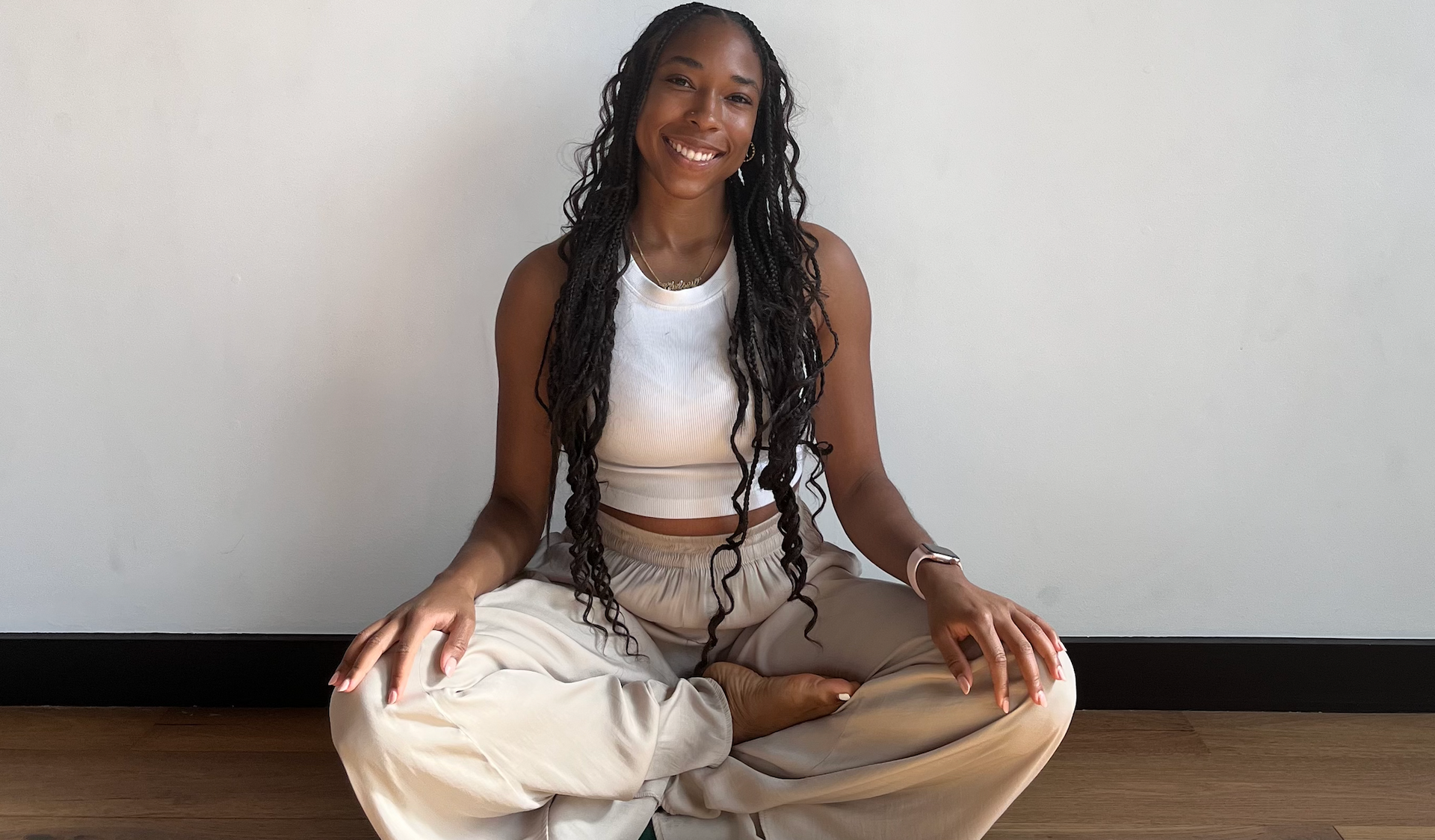
Woman sitting cross-legged on a wooden floor, smiling in a white top and beige pants.

Frequently asked questions

  • How does virtual therapy work?

    Virtual therapy sessions are held over a secure, HIPAA-compliant video platform. All you need is a private space, a stable internet connection, and a device with a camera and microphone.


  • Can I use my insurance for virtual therapy?

     I currently do not accept insurance. I can provide a superbill for reimbursement and I do accept Loveland Vouchers. 

  • What if I need to cancel or reschedule a session?

    I ask for at least 24 hours notice to reschedule or cancel your session. Cancellations made less than 24 hours notice may incur a fee.