
Somatic Therapy | Yoga and Sound Baths in Peachtree Corners | GA

Productivity and peace are not the same thing, and a life built entirely around one can leave the other completely inaccessible. Women who have mastered the art of getting things done often discover, at some point, that the getting done does not produce the relief they expected. The next task arrives and the body is still bracing. Power Through Process is a somatic therapy and sound healing practice for women of color who are ready to close the distance between their productivity and their actual peace. Technology Parkway traces the spine of Peachtree Corners' identity as a technology and business corridor, its campuses and office parks making it one of the most economically productive communities in Gwinnett County. The Forum on Peachtree Pkwy serves as the commercial anchor for residents between workdays, while Jones Bridge Park runs along the Chattahoochee River to the south, its trails offering a green counterpoint to the corporate campus texture of the surrounding area. Medlock Bridge Road connects the community northward toward Johns Creek, and the nearby Chattahoochee River National Recreation Area provides one of the only stretches of genuine natural quiet available within the dense suburban grid. Norcross lies just to the south and Duluth just to the east, both Gwinnett County communities with their own distinct characters and populations. This is a corridor built for efficiency, and the women who live and work within it often reflect that efficiency in every dimension of their lives except the one that most needs attention. The women who come to somatic therapy in Peachtree Corners often describe a quality of dissonance: everything is working, and something is profoundly wrong. The career is solid, the family is managed, the calendar is full. And the body is quietly sending signals that none of those achievements have addressed. My practice is specifically designed for that dissonance, working at the level where the body's actual experience lives rather than at the level of what is measurably going right.

How it works

01


Start where you are—not where you think you “should” be

The body communicates in a language that productivity culture has not valued: sensation, breath, the quality of the nervous system's baseline on any given morning. Somatic therapy learns to read that language and take it seriously. What the body is expressing about stress, depletion, and unmet need becomes the primary subject of sessions rather than a distraction from it.

02


No scripts. Just what your body needs

Reaching out for the first time does not require a crisis or a clear articulation of what is wrong. A first conversation is exactly what it sounds like: two people talking, discovering whether there is a genuine fit between what is being offered and what is needed. From that conversation, a path forward emerges organically.

03


Where science meets soul

The regulation that somatic therapy builds is not a short-term coping resource. It becomes part of the body's new operating range, a wider band of states that includes genuine rest alongside high performance. Clients find that they can be fully present in demanding contexts without the cost being the same. The body has more range and more choice.

Explore my therapy services and specializations


In productivity-oriented environments, the body's signals get systematically overridden. The headache that is worked through. The fatigue that is managed with caffeine. The anxiety that is channeled into preparation. Over time, the body stops sending the signals as clearly because it has learned they will not be heard. Somatic therapy rebuilds the communication channel. Sessions create the conditions for the body's experience to be heard, possibly for the first time in years. What is the body actually saying about the current state of things? What has it been trying to communicate that the schedule has made impossible to attend to? Over time, clients develop the capacity to hear those communications and to take them seriously. All sessions are offered virtually, accessible from any private space in the home or office.

Efficiency environments produce a particular relationship with time: every moment should be contributing to something. Yoga and sound baths introduce a different relationship entirely, one in which the value of an hour is measured entirely by what the body needed rather than what was produced. For women who have been optimizing every dimension of their lives, this is a genuinely radical reorientation. Sound healing sessions use vibrational resonance to move the nervous system out of productivity mode without requiring any effort or decision. The body responds to what is offered and moves toward regulation on its own. Yoga sessions build on that through slow, sensation-focused movement that values presence over performance. Together, they teach the body that nonproductive time is not wasted time. Both offerings are accessible virtually and designed to be genuinely welcoming to women with no prior experience of either.

Efficiency-focused women often bring their productivity orientation into their relationships: managing the connection, maintaining the relationship, ensuring that the relational function is operating well. Relational Gestalt therapy explores what relationships feel like when they are not being managed, when genuine presence replaces careful maintenance. Sessions attend to what actually happens between two people when neither one is managing the interaction. The spontaneous response. The genuine reaction. The thing that comes out before the edit. These moments are the material of the work, and they reveal what is most real about how someone is moving through their relational life. Clients frequently find that the quality of presence they develop in sessions changes their experience of their most important relationships in ways they did not anticipate.

Technology and corporate environments condition the nervous system to stay in a state of sustained readiness that mirrors the pace and demands of the work. Over time, that state becomes the default, and the body loses access to the lower-activation states required for genuine rest and recovery. Nervous system regulation work rebuilds access to those states. Sessions introduce new experiences of safety and ease that the body can learn to access outside of sessions as well. The baseline begins to lower. The sustained readiness that once felt like normal begins to feel like one option among several. Rest becomes genuinely available rather than theoretically desirable. This work is offered virtually and is particularly relevant for women in high-demand professional environments.

High-achieving women in demanding professional environments sometimes discover that beneath the productivity is something older that the productivity has been organized around avoiding. Not always consciously. Just the way the schedule fills up. The way rest creates discomfort. The way stillness produces a quality of anxiety that movement manages away. Somatic trauma therapy creates space for what is underneath. Sessions move carefully and always at the pace of the client's own readiness. Nothing is forced. What the body is ready to approach, the sessions approach. What requires more time, more safety, more care, receives exactly that. The work is never rushed toward resolution. For women in Peachtree Corners whose productivity has been organized in part around not stopping long enough to feel something, this work is a genuinely different kind of investment.

In productivity environments, anxiety and drive are often so intertwined that they cannot be easily distinguished. The activation that makes someone effective at work is the same activation that prevents genuine rest. Sound meditation creates a separation between the two, giving the nervous system a direct experience of the activated state releasing without the competence following it. During sound meditation sessions, the vibrational resonance of healing instruments produces a shift in the nervous system's state that does not depend on mental participation. The release happens before the analytical mind can organize a response to whether releasing is appropriate. Clients often describe this as a significant discovery: that they can let go and still be themselves. Sessions are offered virtually and available from any private space.

For Black women in technology and corporate corridors like Peachtree Corners, the productivity imperative carries an additional dimension: the awareness that being excellent is not optional, that there is less room for error, that the cost of not performing at a high level is different than it is for colleagues who do not share their identity. Therapy in my practice holds that specific reality. My anti-oppressive, decolonizing framework understands that the chronic hyperperformance many Black women exhibit in professional environments is a rational response to a system that has historically provided them less margin for error. The healing work addresses both the systemic context and the personal cost. Black women who come to this practice find a space where their excellence is appreciated and where the exhaustion underneath it is given equal attention.

For women whose entire professional identity is organized around efficiency, somatic yoga offers an experience that cannot be optimized. Its value is not measurable. Its progress is not trackable. Its outcome is not a deliverable. It is the practice of inhabiting the body without agenda, which turns out to be exactly what a body shaped by constant agenda most needs. Sessions move through slow sequences guided entirely by sensation, pausing where the body asks and moving where movement feels genuinely invited. Over time, the practice builds a quality of physical self-knowledge that is entirely distinct from anything produced by performance-oriented exercise. Somatic yoga is available virtually and designed for women whose primary relationship with their bodies has been one of management rather than attunement.

For Black couples in Peachtree Corners and the Gwinnett County corridor, the demands of technology and corporate environments can reduce a relationship to another well-managed project. Black couples therapy in this practice restores the relationship to its status as a living, breathing thing that requires presence rather than management. Sessions are offered virtually.

Technology and corporate organizations in Peachtree Corners operate at the intersection of high performance and genuine human need. My corporate wellness offerings bring somatic regulation tools, sound healing, and nervous system education to teams in the Gwinnett County corridor that are ready for wellbeing that goes deeper than an app. Available virtually.
Serving clients in Peachtree Corners and nearby areas
My virtual practice serves women throughout Peachtree Corners and the surrounding Gwinnett County communities, including Norcross, Duluth, Johns Creek, Suwanee, and neighboring areas of the northeast Atlanta metro. Sessions are accessible from any private space, which means this support is available without adding to an already full schedule. An embedded map of the Peachtree Corners service area appears below.

Chelsey has been a mentor to me in many ways. She has a warm, patient, thoughtful presence that is consistent and unmoving, and the ability to closely contact whatever arises in a calm and non judgemental way that allows for connection. Highly recommend!

Haley Winer

Chelsey and I recently led a group and I was in awe of her ability to hold space, give others feedback, and stay regulated throughout the course. Chelsey was a supportive, caring, and wonderful co-facilitator. I learned so much from her!

Julia Willinger

She's phenomenal. I've had a few different therapists during my mental health journey, but Chelsea is the first one to actually make me feel comfortable enough to be vulnerable. She reminds me that it's okay to acknowledge my feelings, instead of bottling them up in order to process the situation that brought that particular feeling up. I spent a long time feeling invisible; my sessions with Chelsea remind me that I'm here, and I matter. It feels good to feel seen and understood.

Anonymous

What inspires me about Chelsey's clinical skills is that she has a talent and passion for integrating her work with holistic health and wellness. She offers healing on a deep level and her very presence has a calming effect. I highly recommend Chelsey.

Fox Eros Life Stress Intimacy Polyamory

Chelsey's approach to therapy is rich, fulfilling, and empowering. Her groundedness propels her in the ability to be attuned to her clients' needs which is valuable to community healing.

Keri Anderson

I have had the privilege of being Chelsey's supervisor for the past 18 months. She is a caring and compassionate clinician who brings thoughtfulness, warmth and curiosity to her work with clients. I highly recommend Chelsey.

Penny H.

Button

Chelsey has been a mentor to me in many ways. She has a warm, patient, thoughtful presence that is consistent and unmoving, and the ability to closely contact whatever arises in a calm and non judgemental way that allows for connection. Highly recommend!

Haley Winer

Chelsey and I recently led a group and I was in awe of her ability to hold space, give others feedback, and stay regulated throughout the course. Chelsey was a supportive, caring, and wonderful co-facilitator. I learned so much from her!

Julia Willinger

Testimonials

Hello, I'm Chelsey Reese, somatic therapist and sound healer serving Peachtree Corners

I'm a somatic therapist, yoga practitioner, and sound healing facilitator, and the founder of Power Through Process Wellness Co., serving women of color in Peachtree Corners and across the Atlanta metro. My work draws from somatic experiencing, polyvagal theory, relational Gestalt, and trauma-informed mindfulness, within an anti-oppressive, decolonizing framework. I work with women who are productive and privately depleted, who have built successful lives and are ready to build an inner life that matches. My practice stands on this: empowering women of color to listen to the wisdom inside their bodies, release stored trauma, and step into an abundant life of peace and connection.
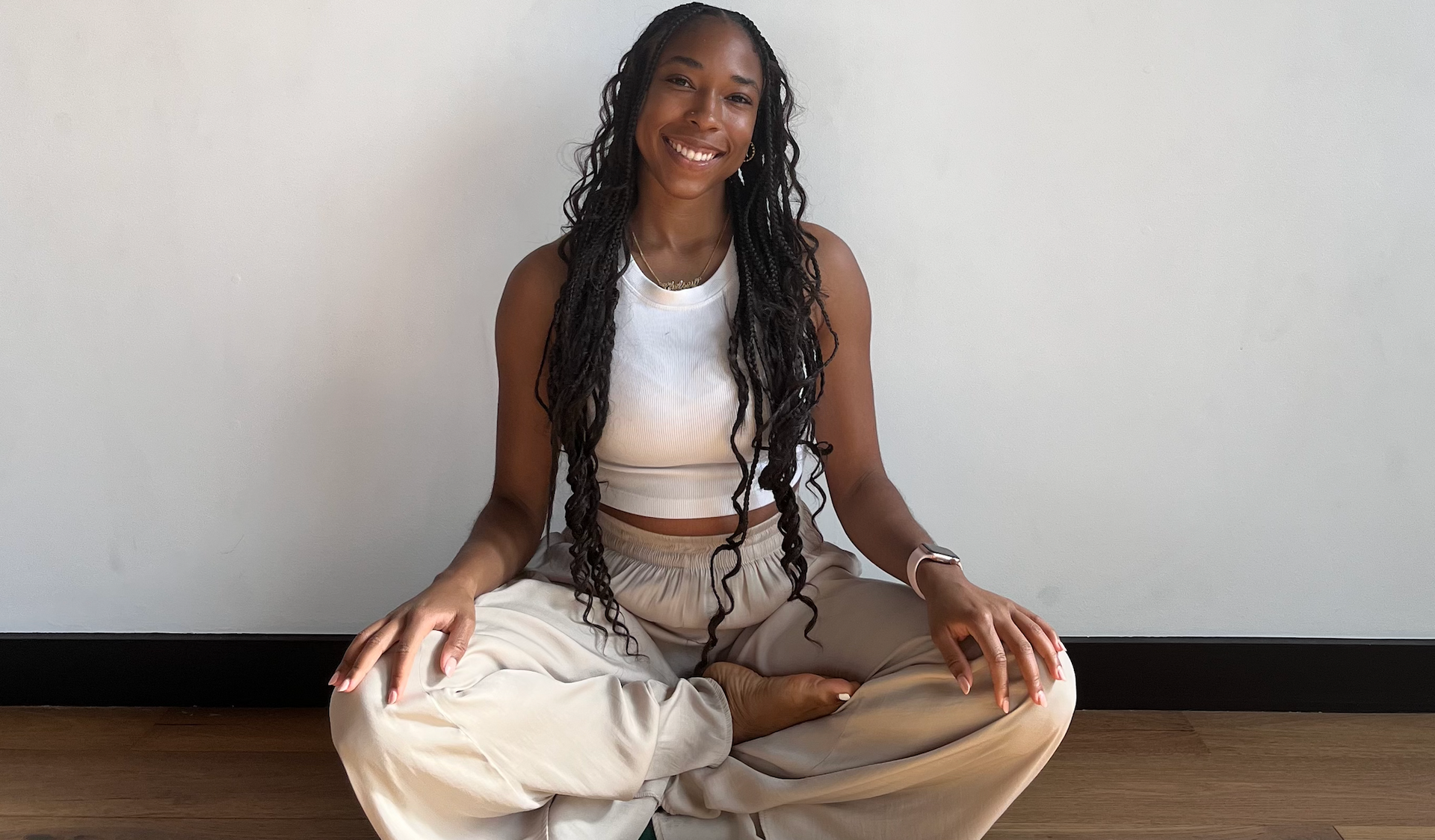
Woman sitting cross-legged on a wooden floor, smiling in a white top and beige pants.

Frequently asked questions

  • How does virtual therapy work?

    Virtual therapy sessions are held over a secure, HIPAA-compliant video platform. All you need is a private space, a stable internet connection, and a device with a camera and microphone.


  • Can I use my insurance for virtual therapy?

     I currently do not accept insurance. I can provide a superbill for reimbursement and I do accept Loveland Vouchers. 

  • What if I need to cancel or reschedule a session?

    I ask for at least 24 hours notice to reschedule or cancel your session. Cancellations made less than 24 hours notice may incur a fee.