
Somatic Therapy | Yoga and Sound Baths in Silver Lake | CA

Some exhaustion is too quiet to name. It is not crisis. It is not collapse. It is the persistent low-level static of a life moving faster than the inner world can keep pace with. Power Through Process is a somatic therapy and sound healing practice built for that kind of tired, for women of color who are living interesting, full lives and still cannot find their way to genuine stillness at the end of the day. Silver Lake is threaded together by water and gradient. The reservoir sits at its center, the surrounding trails and the grassy meadow below drawing walkers and writers and the kind of early morning that still belongs to whoever shows up for it. Sunset Junction marks the neighborhood's social pulse, where Hyperion Ave and Sunset Blvd meet and the coffee shops and record stores and taquerías of the Eastside converge. Rowena Ave runs north past the dog park and the playgrounds into the hills, while the neighborhood bleeds west toward Echo Park and east toward Los Feliz. Griffith Park begins just north of the neighborhood's upper edge, and the Silverlake Conservancy traces the green paths below the water. This is a community of people who are often very thoughtful about their inner lives and still find that the inner life resists being thought about. The women who come to somatic therapy in Silver Lake often have a sophisticated understanding of psychology and wellness. They have done the cognitive work. They can describe their attachment patterns, their family dynamics, their nervous system responses. What brings them to this practice is the recognition that understanding a thing intellectually has not been sufficient to change how it lives in the body. This work picks up exactly where that understanding leaves off.

How it works

01


Start where you are—not where you think you “should” be

Rather than organizing sessions around what a client thinks or believes, somatic therapy uses the nervous system's own responses as the primary source of information. When a topic is mentioned and the breath shortens, that shortening is data. When the body braces against something that seems benign, that bracing is data. Sessions learn to read that data and work with it directly, at the level where it is actually occurring.

02


No scripts. Just what your body needs

Reaching out does not require a crisis, a diagnosis, or a clear articulation of what is wrong. The entry point into this work is simply the sense that something in the body needs attention. The first conversation is relaxed and exploratory. We find out together whether this feels like the right fit, and from there, a path takes shape organically.

03


Where science meets soul

What changes through this work changes at the level of the nervous system, which means it changes in a way that does not require ongoing maintenance or reminding. Clients describe finding themselves less reactive before they have consciously registered what they are responding to. Rest becomes more available. The sense of baseline safety expands. These are not achievements to be sustained through effort. They become the new ordinary.

Explore my therapy services and specializations


The clients who arrive at somatic therapy from communities like Silver Lake often bring with them a considerable amount of self-knowledge. They have done the reading, attended the workshops, and built a sophisticated vocabulary for their experience. Somatic therapy meets all of that and then goes one level deeper, into the body where the knowledge has not yet fully landed. Sessions follow the body's cues rather than a predetermined agenda. What the nervous system activates, what the breath does, where the body tightens or withdraws. These responses are the material. Working with them directly tends to produce change that is more durable and more integrated than change produced by insight alone. Sessions are offered virtually, accessible from a home, a studio, or any private space. The quality of presence in the work translates fully across the digital medium.

For people who spend a lot of time in their heads, the body can feel like a place that is always slightly out of reach. The ideas are vivid and accessible, the intellectual life rich, but the experience of being fully inside one's own physical experience remains elusive. Yoga and sound baths work to close that gap from the body's side rather than from the mind's. Sound baths use the physics of vibration to shift the nervous system's state in ways that are not dependent on intention or effort. Clients do not need to know how to receive the work. The body handles it. Yoga sessions complement this with slow, exploratory movement that invites sensation to become more legible rather than more controlled. Both practices are available virtually and designed to be accessible regardless of prior experience.

Thoughtful people often have a particular relational challenge: they can see themselves and their patterns clearly and still find themselves repeating them. Understanding has not been sufficient for change. Relational Gestalt therapy works with the living experience of relationship rather than its conceptual representation, which reaches the part of the pattern that self-awareness alone cannot. Sessions attend to what is happening between practitioner and client in real time. The quality of contact. The places where connection is sought and where it is deflected. What the body does when presence is offered fully. This immediacy is the method, and its effects tend to be more lasting than those produced by retrospective analysis. Clients frequently describe this work as the first time they have felt genuinely met in a therapeutic relationship, which itself becomes part of the healing.

Intellectually oriented people often experience their own nervous system responses as frustrating contradictions. They know that a situation is safe and yet the body responds as if it is not. They understand why they react the way they do and still react that way. Nervous system regulation work addresses this directly, not by overriding the body's responses but by teaching it to expand its sense of what is safe. The work builds what nervous system researchers call the window of tolerance, the band of activation within which the body can be present without either freezing or flooding. As that window expands, more of life becomes navigable. The contradiction between knowing and feeling begins to resolve, not through better understanding but through new experience. This work is offered virtually and appropriate for women at any stage of their healing journey.

Trauma in high-functioning, self-aware people often presents as confusion rather than obvious distress. They have done enough work to know the origins of their patterns but cannot understand why knowing has not resolved them. Somatic trauma therapy works in exactly this gap, attending to the body's held experience rather than the mind's account of it. Sessions create space for what has been physiologically held to move, at whatever pace the nervous system finds manageable. The approach is never confrontational and never rushed. Clients are in continuous contact with their own sense of what feels workable, and the sessions adjust accordingly. What resolves through this work often includes dimensions that were not part of the original description of the problem. The body's wisdom about what needs attention turns out to be more comprehensive than the mind's.

In communities that value depth and thoughtfulness, anxiety sometimes presents as an overactive mind that cannot find an off switch. The analysis continues past usefulness. The planning continues past the point where planning helps. The body stays activated in the service of a mental process that has lost its endpoint. Sound meditation bypasses that loop. The vibrations used in sound meditation do not require the mind's participation to produce their effect. The nervous system responds before the analytical mind can organize a response to what it is experiencing. This is precisely the quality that makes sound meditation useful for women who are skilled at thinking their way around their own somatic experience. Sessions are accessible virtually and require no prior experience with meditation or sound healing.

Black women in creative and intellectual communities carry a specific kind of visibility pressure, the expectation to be the thoughtful voice in the room, the one who holds the analysis together, the one who both lives the experience and articulates it for others. This is exhausting in a way that being a productive intellectual cannot mitigate. My practice is grounded in an anti-oppressive, decolonizing framework that understands this specific exhaustion in its full cultural and historical context. The work does not require Black women to perform insight or demonstrate awareness in order to receive care. The care is offered without those conditions. This is a space where being a Black woman is the starting point, not the explanation. Everything that comes with that is welcome, and it is met with full attention.

For people who live primarily through their intellectual lives, somatic yoga can be the first practice that makes the body feel genuinely interesting rather than incidental. Moving slowly enough to actually notice sensation, pausing at the edges of experience rather than pushing through them, following the body's own rhythm rather than imposing one from outside. The practice is exploratory by design. There is no right shape or right response. What matters is the quality of attention brought to the movement and the willingness to let what arises be the guide. Over time, this attention becomes a form of self-knowledge that is different from anything the analytical mind produces. Somatic yoga is offered virtually and is accessible to women at any level of physical practice or body awareness.

Black couples in Silver Lake and the eastside of Los Angeles bring the full complexity of their individual healing journeys into their relationship. This therapy holds both people at once, attending to the relational dynamic while honoring each partner's individual experience. Sessions are available virtually.

Creative and intellectual organizations in Silver Lake often have the language for wellbeing without the embodied practice of it. My corporate wellness programs bring the body back into the conversation, offering somatic tools and nervous system education that support genuine flourishing rather than productivity metrics. Available virtually.
Serving clients in Silver Lake and nearby areas
My practice serves women throughout Silver Lake and the surrounding eastside communities, including Echo Park, Los Feliz, Atwater Village, East Hollywood, and neighboring areas along the Sunset Blvd corridor. All sessions are virtual, meaning a client in Silver Lake, a walk from the reservoir or a drive from Griffith Park, accesses the same depth of care as anyone in the broader region. An embedded map of the Silver Lake service area appears below.

Chelsey has been a mentor to me in many ways. She has a warm, patient, thoughtful presence that is consistent and unmoving, and the ability to closely contact whatever arises in a calm and non judgemental way that allows for connection. Highly recommend!

Haley Winer

Chelsey and I recently led a group and I was in awe of her ability to hold space, give others feedback, and stay regulated throughout the course. Chelsey was a supportive, caring, and wonderful co-facilitator. I learned so much from her!

Julia Willinger

She's phenomenal. I've had a few different therapists during my mental health journey, but Chelsea is the first one to actually make me feel comfortable enough to be vulnerable. She reminds me that it's okay to acknowledge my feelings, instead of bottling them up in order to process the situation that brought that particular feeling up. I spent a long time feeling invisible; my sessions with Chelsea remind me that I'm here, and I matter. It feels good to feel seen and understood.

Anonymous

What inspires me about Chelsey's clinical skills is that she has a talent and passion for integrating her work with holistic health and wellness. She offers healing on a deep level and her very presence has a calming effect. I highly recommend Chelsey.

Fox Eros Life Stress Intimacy Polyamory

Chelsey's approach to therapy is rich, fulfilling, and empowering. Her groundedness propels her in the ability to be attuned to her clients' needs which is valuable to community healing.

Keri Anderson

I have had the privilege of being Chelsey's supervisor for the past 18 months. She is a caring and compassionate clinician who brings thoughtfulness, warmth and curiosity to her work with clients. I highly recommend Chelsey.

Penny H.

Button

Chelsey has been a mentor to me in many ways. She has a warm, patient, thoughtful presence that is consistent and unmoving, and the ability to closely contact whatever arises in a calm and non judgemental way that allows for connection. Highly recommend!

Haley Winer

Chelsey and I recently led a group and I was in awe of her ability to hold space, give others feedback, and stay regulated throughout the course. Chelsey was a supportive, caring, and wonderful co-facilitator. I learned so much from her!

Julia Willinger

Testimonials

Hello, I'm Chelsey Reese, somatic therapist and sound healer serving Silver Lake

I'm a somatic therapist, yoga practitioner, and sound healing facilitator, and the founder of Power Through Process Wellness Co. I serve women of color across Silver Lake, the eastside of Los Angeles, and beyond. My work draws from somatic experiencing, polyvagal theory, relational Gestalt, and trauma-informed mindfulness, held within an anti-oppressive, decolonizing framework. I work with women who have thought deeply about themselves and are ready to bring that depth into the body where it can produce lasting change. This practice is built on the conviction that empowering women of color to listen to the wisdom inside their bodies, release stored trauma, and step into an abundant life of peace and connection is exactly what the world needs.
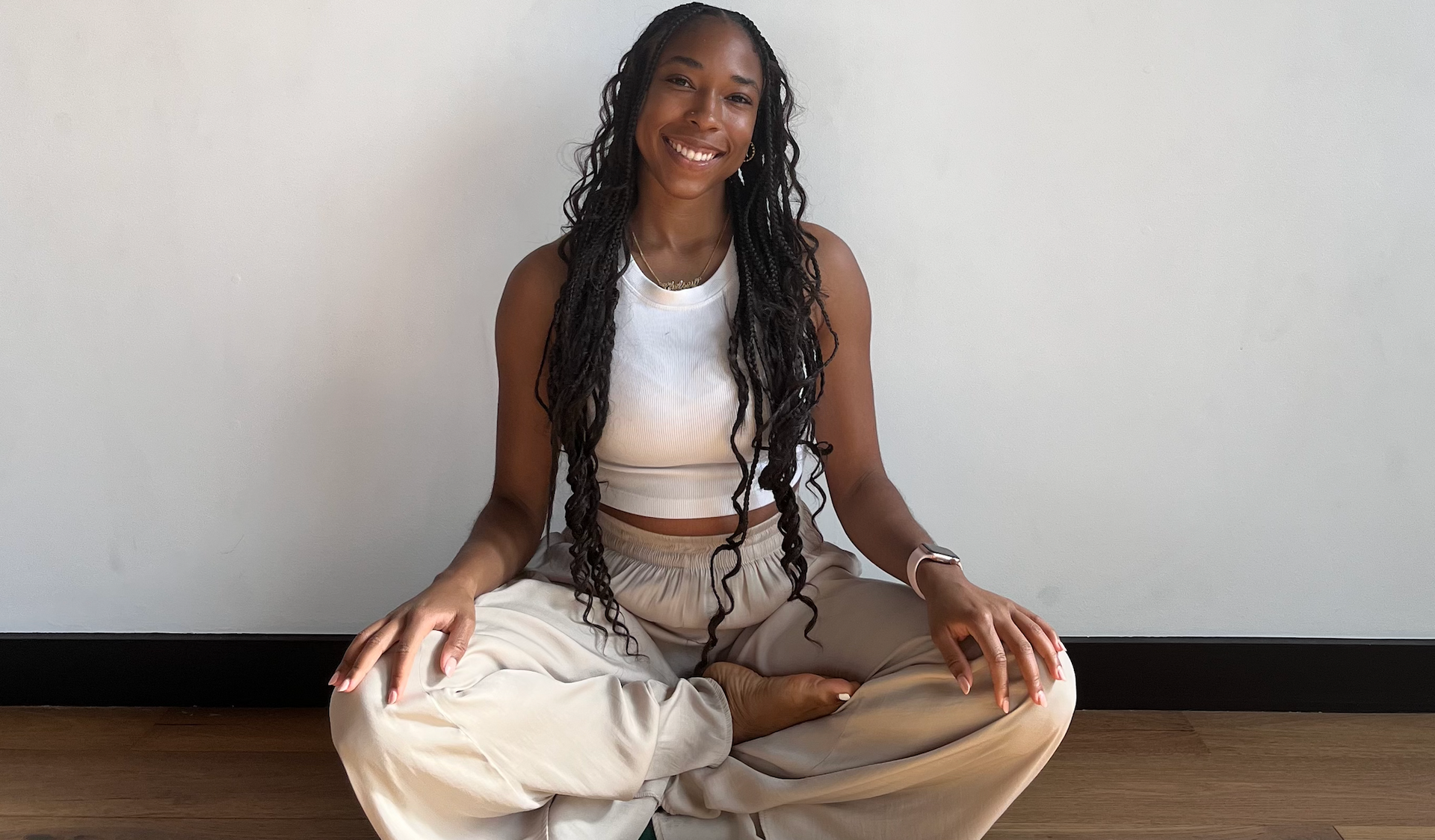
Woman sitting cross-legged on a wooden floor, smiling in a white top and beige pants.

Frequently asked questions

  • How does virtual therapy work?

    Virtual therapy sessions are held over a secure, HIPAA-compliant video platform. All you need is a private space, a stable internet connection, and a device with a camera and microphone.


  • Can I use my insurance for virtual therapy?

     I currently do not accept insurance. I can provide a superbill for reimbursement and I do accept Loveland Vouchers. 

  • What if I need to cancel or reschedule a session?

    I ask for at least 24 hours notice to reschedule or cancel your session. Cancellations made less than 24 hours notice may incur a fee.